
Atomic Habits for Aesthetic Medicine:
How to build a clinic that compounds
Author: Taylor Siemens
In aesthetic medicine, we talk a lot about goals.
Revenue goals. Rebooking goals. Retention goals. Consult conversion goals. Social media goals. Training goals. Growth goals.
But goals are not what build a great clinic.
Systems do.
That is one of the reasons Atomic Habits by James Clear is so relevant to aesthetic medicine. On the surface, it is a book about personal habits. But when its principles are translated into the daily realities of clinical care, team leadership, consults, photography, retention, and patient experience, it becomes something much bigger.
It becomes a framework for building an aesthetic medicine practice that actually compounds. Not just one that grows quickly. Not just one that looks successful online. One that gets better over time because the right behaviors are happening consistently, visibly, and intentionally.
The aesthetic medicine practices that last are rarely built from one dramatic breakthrough. They are built through repeated behaviors, clear systems, strong clinical identity, and the ability to keep going when the results are not yet visible.
There are three concepts from Atomic Habits that every aesthetic clinician, clinic owner, and operator should understand.
1. Systems over goals
2. Identity-based habits
3. The plateau of latent potential
When applied to aesthetic medicine, these concepts can change how a clinic approaches growth, leadership, patient care, and long-term excellence.

Why Goals alone do not build great aesthetic practices
One of the most important ideas in Atomic Habits is this:
“You do not rise to the level of your goals. You fall to the level of your systems.” That sentence should stop every aesthetic clinic owner in their tracks. Because most of the numbers clinic owners obsess over are not actually goals. They are outputs.
Your rebooking rate is an output. Your retention rate is an output. Your consult conversion rate is an output. Your average ticket is an output. Your patient experience is an output. Your clinical consistency is an output. Your brand reputation is an output. Every one of those outcomes is produced by something upstream.
That upstream force is the system.
If consult conversion is low, the solution is not simply to tell the team to “convert better.” The question is: what system produces consult conversion?
Is there a pre-consult intake process? Does the provider know the patient’s concerns before walking into the room? Is there a clear discovery structure? Is there a consistent treatment planning framework? Is the financial conversation handled with confidence and clarity? Is there a defined close?
If not, there is not a consult conversion goal. There is a wish.
The same is true for rebooking. If no patient leaves the chair without a rebooking conversation, that is a system. If rebooking depends on who happens to be at the front desk, how busy the schedule is, or whether the provider remembers to mention it, that is not a system. That is chance.
And chance does not compound.
The Clinic systems every aesthetic practice needs
Most clinics do not need more goals. They need more clearly designed systems.
Aesthetic practices should be building systems around the behaviors that produce growth, consistency, and patient trust.
Here are a few examples.
1. The Consult Flow
Your consult flow is the system behind consult conversion.
It should include the patient’s pre-visit intake, the discovery process, clinical education, treatment planning, expectation setting, and the financial conversation.
A great consult should feel human, personal, and individualized. But that does not mean it should be unstructured. The structure creates the conditions for trust.
2. The Pre-Checkout Conversation
Your pre-checkout conversation is the system behind rebooking.
Patients should not leave the treatment room unclear about what comes next. The provider should be teeing up the next step before the patient reaches checkout. That may sound like: “Based on what we treated today, I want to see you back in six weeks so we can evaluate your response and decide whether we are ready for the next step.” That one sentence can change retention.
3. The Follow-Up Cadence
Your follow-up cadence is the system behind patient retention and long-term trust.
The 48-hour check-in. The two-week photo. The six-week revisit. The next-step recommendation. If those touchpoints are not built into the workflow, they will eventually disappear when the clinic gets busy. And the clinic will always get busy.
4. The Photography System
Photography is one of the most underestimated systems in aesthetic medicine.
Consistent photography supports clinical growth, case review, patient education, marketing, documentation, and brand trust. Same angles. Same lighting. Same cadence. Same expectations. Every patient. Every visit.
If before-and-after photos depend on memory, mood, or available time, the process will not be consistent enough to compound.
how to systemize a relationship business without losing the relationship
Aesthetic medicine is a relationship business.
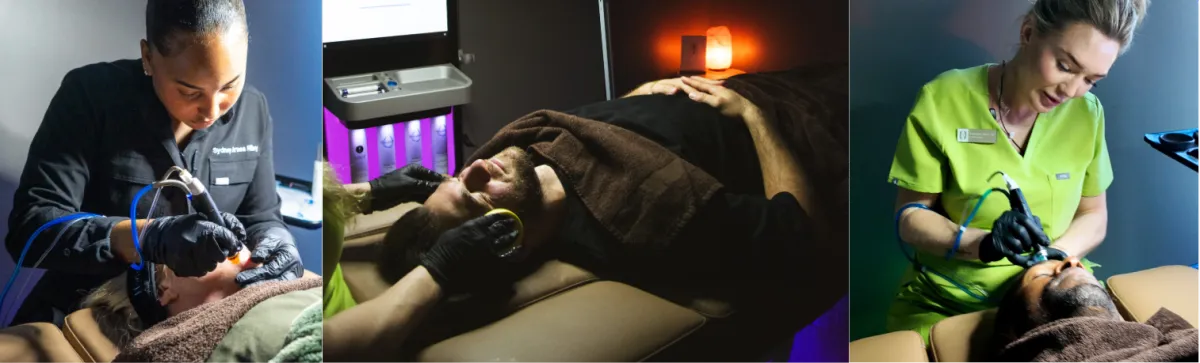
That is why some clinicians resist systems. They hear “system” and think “scripted.” They worry that structure will make the patient experience feel robotic or transactional. But the system is not the relationship. The system creates the conditions for the relationship to happen. The system is the room being ready. The chart being reviewed. The provider walking in prepared. The patient not waiting too long. The lighting being right. The photography setup being available. The financial conversation being clear. The follow-up already being scheduled. You systemize the conditions. You leave the relationship to the human. That distinction matters. The best clinics are not systemized instead of being relational. They are relational because they are systemized.
Identity-based habits for aesthetic clinicians
Another major concept from Atomic Habits is identity-based behavior change. Most people try to change from the outside in.
They start with an outcome:
“I want to be a great injector.”
“I want to build a successful clinic.”
“I want to grow my revenue.”
“I want to become a better leader.”
But durable change usually starts deeper than that. It starts with identity.
“I am the kind of clinician who reviews every case.”
“I am the kind of provider who photographs every patient.”
“I am the kind of operator who knows my numbers.”
“I am the kind of leader who holds weekly one-on-ones.”
“I am the kind of owner who protects the brand, even when it costs revenue this quarter.”
Those are different sentences. And different sentences create different lives. Outcome-based habits rely on motivation. Identity-based habits rely on self-concept. Motivation comes and goes. Self-concept is more stable. A clinician who believes, “I am the kind of provider who reviews my cases,” does not have to renegotiate that decision every night. The habit becomes an expression of who they are.
That is where real consistency begins.
The identity trap in aesthetic medicine
There is an important warning here. Not all identities are created equal. The aesthetic industry is full of identities that look productive but do not necessarily compound into clinical or operational excellence.
The celebrity injector identity.
The “social media first” identity.
The “top one percent” identity.
The “I am a businessperson now” identity.
Those identities can generate behavior. They can build visibility, audience, and recognition. But visibility is not the same as excellence. A brand is useful. A clinic needs a brand. But a brand without an underlying identity is just a marketing campaign with a person attached.
The identity that matters is the one that shows up on a Tuesday at 4 p.m. when no one is watching. That is the clinician who reviews the complication. The provider who takes the photo even when the schedule is behind. The owner who holds the one-on-one even during a chaotic week. The leader who tells the truth when it would be easier to avoid the conversation. The injector who refers out when the case is not appropriate. That is the identity that compounds.
Every Action Is a Vote
One of the most practical ideas in Atomic Habits is that every action is a vote for the type of person you are becoming.
Every case review is a vote. Every photo logged is a vote. Every rebooking conversation is a vote. Every follow-up message is a vote. Every team meeting held consistently is a vote. Every complication reviewed honestly is a vote. And every skipped action is also a vote.
That does not mean perfection is required. You do not need to win every vote. You need to win the majority.
This is a helpful way to think about clinical growth and clinic operations because excellence is rarely built in dramatic moments. It is built in small, repeated behaviors that often feel insignificant while they are happening. Until they are not insignificant anymore.
The plateau of latent potential in aesthetic medicine
One of the most important concepts in Atomic Habits is the plateau of latent potential.
James Clear uses the metaphor of an ice cube sitting in a cold room. The temperature rises from 25 degrees to 26, then 27, then 28, then 29, then 30, then 31.
Nothing happens.
Then the room reaches 32 degrees, and the ice begins to melt. The work from 25 to 31 degrees was not wasted. It was just not visible yet. That is what aesthetic medicine feels like.
Clinical skill lags behind reps. Brand reputation lags behind consistency. Retention lags behind follow-up. Team culture lags behind leadership.
Revenue lags behind systems. A clinician or clinic owner may be doing the right things for months without seeing the full result.
That does not mean the work is not working. It may mean the clinic is inside the lag. This is especially important for anyone building something new. New clinic. New brand. New systems. New team. New audience. New everything. In those seasons, the feedback loop gets wider. The work is still happening, but the visible results may not arrive quickly enough to reinforce the behavior.
That can feel like failure. But often, it is not a discipline problem. It is a feedback problem.
Next Steps:
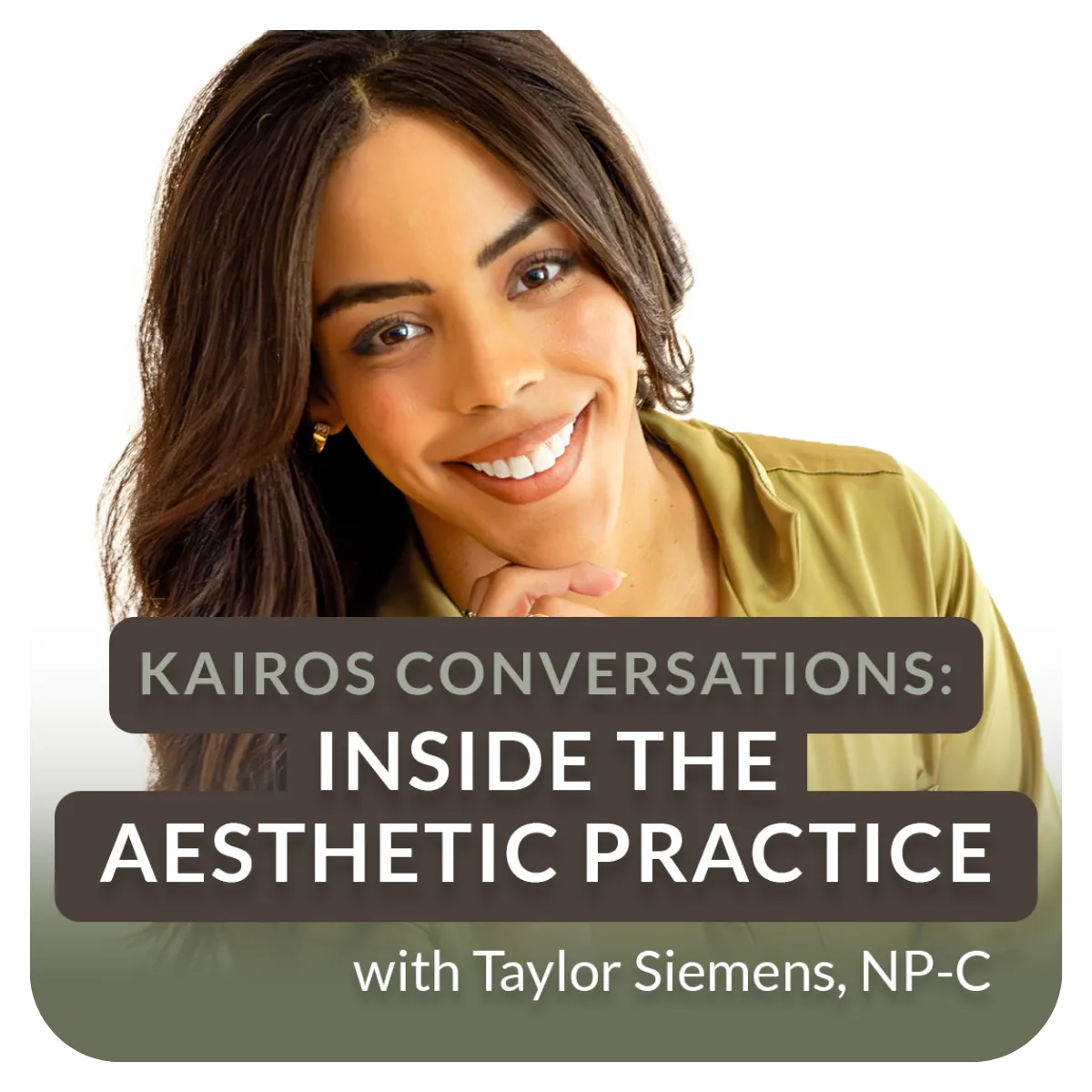
If you are ready to learn more about how to build an Atomic Clinic, check out our podcast, Kairos Conversations: Inside Aesthetic Medicine. Episode 3: The Atomic Clinic.
Download The Atomic Clinic Checklist
To begin applying this inside your clinic, download
The Atomic Clinic: a one-page checklist with five habits you can start tomorrow.
Use it to choose your identity statement, design the system behind it, and track the inputs that will eventually become your outcomes.
Start with one habit.
Start tomorrow.
Let it compound.
Copyright 2026 . All rights reserved


